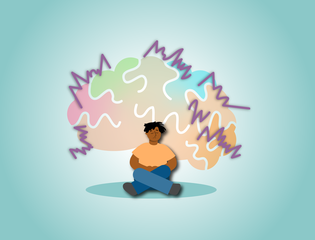
TLDR: Nervous breakdowns
“Nervous breakdown” isn’t a medical term — it’s often used to describe feeling overwhelmed, at breaking point, or unable to cope due to stress or emotional overload.
Not exactly. Professionals usually talk about a mental health crisis, which means someone may be at risk of harming themselves or struggling to care for themselves.
Feeling anxious or low, withdrawing from others, struggling to leave the house, being tearful, and feeling out of control or unlike yourself.
You can talk to your GP, a mental health charity, or reach out anonymously for support. Help might include therapy, time off, medication, or learning ways to manage stress.
Try being honest in everyday conversation or talk while doing an activity like walking. Sharing trusted information can also help others understand how to support you.
What is a nervous breakdown?
You may hear the terms ‘nervous breakdown’ and ‘mental breakdown’ used all the time. We use it to describe all sorts of situations, from someone who’s hit rock bottom and feels they can’t go on anymore, to just being really stressed out and feeling on the edge. These kinds of feelings can be triggered by a single traumatic event, a stressful situation, or lots of smaller things building up.
Yet, medically, ‘nervous breakdowns’ don’t exist. If you go to the doctor or a mental health professional about how you’re feeling, they won’t use the word. They are more likely to use terms such as having a ‘mental health crisis’ or ‘reaching crisis point’. That doesn’t mean you won’t get support though. Whatever you’re feeling and whatever the language, it’s ok to ask for help.
And there’s a lot out there to help.
What is a mental health crisis?
A mental health crisis usually refers to any situation where a person is at risk of hurting themselves or others. This could be due to not being able to care for themselves or be part of a wider community, or physically trying to hurt themselves or others. It doesn’t necessarily mean a person has a mental illness, although certain mental illnesses may make someone more likely to experience a mental health crisis.
This might sound slightly different to what you think a nervous breakdown might be. However, a nervous breakdown can mean that you withdraw from others or feel a risk to yourself.
Nervous breakdown symptoms
Because the term nervous breakdown is not a medical term, and is really varied in use, it can be difficult to know if you’re having a nervous breakdown. The symptoms can vary so much that the signs of a nervous breakdown could be very different from one person to the next. However, typically a mental health crisis has the following symptoms or experiences:
- Feeling anxious, worried or scared
- Being negative about everything in your life and feeling low
- Feeling withdrawn and finding it difficult to get involved in things you would normally do in day to day life
- Finding it difficult to leave the house
- Getting tearful and upset very easily
- Feeling like your life is out of control, or having thoughts and feelings that are very out of character
- Having a strong sense of just not feeling your normal self
Support for a mental health crisis or ‘breakdown’
If you’re experiencing several of the symptoms above it may be worth seeking support. Your GP or a reputable mental health charity would be a good first port of call for help and advice. There are lots of online resources that might be helpful for you, and better suited if you’re not ready to talk about it.
If you’re not quite ready to visit your GP, remember you can always talk to us anonymously. Our trained team is here to listen and you don’t have to discuss anything you’re not comfortable with.
Otherwise, if you’re ready and happy to see your GP, they’ll be able to advise on the support available to you and help you get access to it. They may recommend certain different types of therapy, time off work, or medication. Learning some coping strategies for stress can also be a big help.
How do I talk to my friends and family about my mental health crisis?
The first step is to be honest about how you’re feeling when you’re asked. Being honest about how you’re feeling and how your mental health is in general conversation will make talking about it seem less like an event to plan for and will let conversation naturally flow from there.
Otherwise, you could try telling them while you’re doing something else. Planning an activity, such as going for a walk, will mean there’s other things around you to help with conversation. This might help to take away some of the awkwardness you might feel.
If you’re still worried, you can source some information from trusted websites for your family. This should help support them in understanding how you’re feeling. That way you can tell them how you’re feeling and then pass them some information on what that means and how they can support you.
Published