What is autism?
Autism affects how people communicate, socialise and make sense of the world. This can make day-to-day life challenging. Autism also comes with its positives. Depending on the individual, this could mean being especially passionate about something, having great compassion or a strong sense of what’s right and wrong.
Autism should be seen as a difference, not a disadvantage.
Autism is different for everyone
Like all people, the experiences of autistic people vary a lot. You may have heard people use the term ‘spectrum’ – although some prefer to refer to it as a circle, this is a way of expressing the range of experiences autistic people have.
Some autistic people will have high support needs: they may be non-verbal, meaning they don’t speak, but they may also be unfazed by new experiences or meeting new people. Other people will be entirely independent: they might do really well at school or work but struggle with social situations or making friends.
What are the signs of autism?
While there’s no ‘one size fits all’ and signs of autism will be different person-to-person, some things are commonly experienced by autistic people. For example:
- Finding it difficult to communicate and interact with others: This can include finding it hard to read body language or facial expressions, or finding it difficult to know how other people are feeling. This can make social situations stressful or uncomfortable
- Repetitive or restrictive behaviour: Autistic people sometimes have highly focused interests and hobbies. This can be really positive - enjoyable, comforting, and people often become experts in their area of interest. It’s just important to ensure other key areas of life aren’t neglected as a result
- High sensitivity: Some autistic people are highly sensitive to bright lights and noises. They can become easily overwhelmed which can lead to anxiety or panic attacks
- Mental health challenges: Although they’re not a sign of autism, mental health issues like anxiety and stress are often associated with it. This is often due to a lack of acceptance and understanding from society and others, rather than the autism itself
Is autism a learning disability?
Autism isn’t a learning disability, but a third of autistic people also have a learning disability and will need extra support.
And what about 'aspergers'?
'Aspergers' is a term previously used to diagnose a section of autistic people.
The term is no longer considered appropriate as it reinforces unhelpful stereotypes about autism. Instead, we can simply use ‘autism’, or Autism Spectrum Disorder (ASD), to talk about autism, no matter what kind of needs someone has.
Getting support
Most autistic people will need support at some time or in some form. Fortunately there’s lots of help out there - the Autism Directory is a great place to find local and national services, including:
- Peer support groups and clubs
- Mental health support and therapy
- Residential and supported living services
- Employment support
For more information about autism in the workplace, read our handy guide to Neurodiversity at Work.
How to support an autistic person
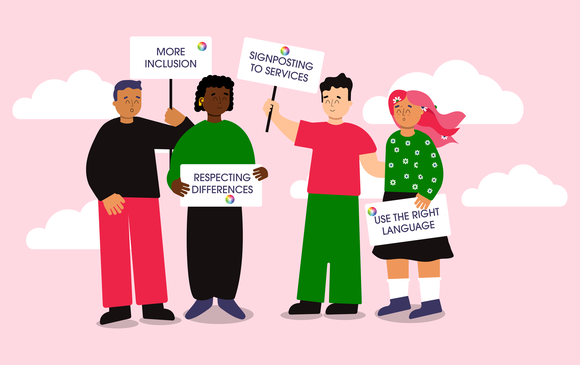
If you know an autistic person, there are lots of ways to support them, but the main thing you can do is accept them for who they are. You can also:
- Include them. Whether it’s a sibling or a friend, it’s important to make sure autistic people feel included, just like anyone else. If you have plans to go to the cinema, or are setting up a study group, invite them. They may not want to come but will appreciate being invited. If you’re with someone, or making plans to involve them, be aware of their needs. Ask if you're unsure, and be prepared to leave a scenario if it doesn’t feel right for them.
- Respect their differences. Everyone is different and that’s a great thing. Get to know their interests and stand up for them if you think they might be being bullied or unfairly treated because of their differences.
- Use the right language. Different people will want to use different language to describe their experience. For example, some people will prefer to use ‘autistic person’ and others will prefer ‘on the autism spectrum’. The key is to listen and respect their choice.
- Signpost to services. If someone you know has a specific issue and would like your help, you could try using the directory to find a person or service that would be able to support them.
If you take one thing from this article, please let it be this:
There is nothing wrong or weird about being autistic. In fact, being different is what makes the world wonderful. If you are autistic, find things that make you feel happy and safe and find the people that make you feel good. Ask for help when you need it and don’t let anyone try to change you, because you don’t need changing.
To find out more about autism
- What is autism? Watch this live stream, developed by young autistic people
- Read this uplifting letter to young autistic people
- Find helpful tips relating to the world of work in BeyondAutism’s employability toolkit
- Explore this book about what it means to be a part of the autistic community
- What is neurodiversity? Read our article to find out more
The Mix would like to thank BeyondAutism for their expert support with this article. For more information and support, check out their resource hub.
Published