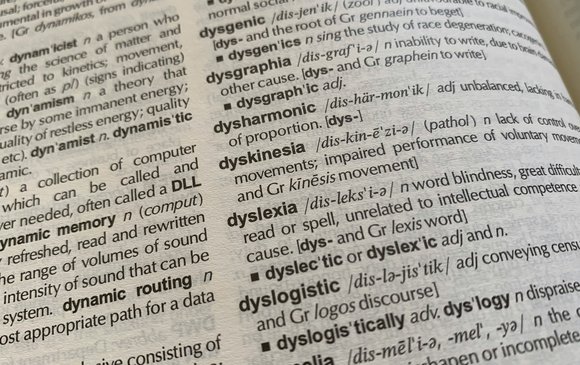
What is dyslexia?
Dyslexia is a learning difficulty that affects your ability to read, write and spell. It can also cause problems with numbers, directions and short-term memory. It is considered a learning difficulty rather than a learning disability as it doesn’t generally affect your ability to carry out day-to-day activities beyond reading, writing and spelling.
Is dyslexia a disability?
Yes, dyslexia is now recognised as a disability by teachers and psychologists and considered a disability under the Disability Discrimination Act. The British Dyslexia Association quotes research suggesting that the condition seriously affects 4% of the population, with up to 10% showing signs of difficulties. Recent evidence indicates these problems are caused by the different ways that dyslexic people process language, especially in the left hemisphere of the brain. This doesn’t mean that dyslexia affects your intelligence: Dyslexic people can be successful in any area of life and often show a lot of creative or intellectual ability.
What are the symptoms of dyslexia?
- Reading very slowly
- Difficulty with spelling
- Mixing up sounds in long words
- Confusing numbers, dates and times
- Needing to have instructions repeated
- Problems with note taking
- Finding it difficult to plan work
- Struggling with exams
How do I find out if I’m dyslexic?
If you recognise some of the symptoms above, you might be dyslexic. To get a proper diagnosis you need to see an educational psychologist or specialist teacher. If you’re a student, contact your disability or learning support advisor and ask them to help arrange this. At university, the cost of assessment can be paid for out of the Hardship Fund. You can find an educational psychologist yourself though the British Psychological Society, or contact the British Dyslexia Association or Dyslexia Action for information about assessments from specialist teachers.
Having an assessment can be a way to identify your strengths and weaknesses and get the support you need, as well as reassuring you that your difficulties are not your fault.
What support can I get for dyslexia?
Specialist teaching can help overcome many writing and spelling difficulties. You can learn techniques to improve your reading speed, and pictures or diagrams can help with remembering things and organising your work. For more information about specialist teaching, contact Dyslexia Action.
There are lots of dyslexia-friendly materials and apps online, such as the dyslexie font, designed specifically to be easier for dyslexic people to read.
At college or university you should be offered support from the disability office, where recommendations are usually made after an assessment of your needs. In higher education, you can apply for Disabled Students’ Allowances towards the extra costs.
Common adjustments for dyslexia include:
- Extra tuition and help with language skills and structuring work
- Use of a computer or laptop
- Specialist software, for example, word prediction, speech recognition or mind mapping
- Handouts and book lists in advance of classes
- Notetaker, known as a ‘scribe’
- Digital recorder for lectures
- Extra time for coursework or exams
- Materials on different coloured paper
Dyslexia in the workplace
Similar support is available in the workplace, where you’re protected by the disability act. Under the Disability Discrimination Act, employers have to make reasonable adjustments for people with dyslexia. If you’re struggling at work you can talk to your line manager or, if you prefer, the HR (Human Resources) department. They should keep any sensitive personal information about disability at work confidential and not tell anyone else without your permission. A dyslexic employee should not be treated any differently to an employee without dyslexia.
Published