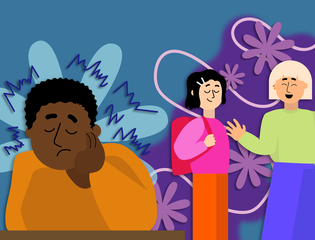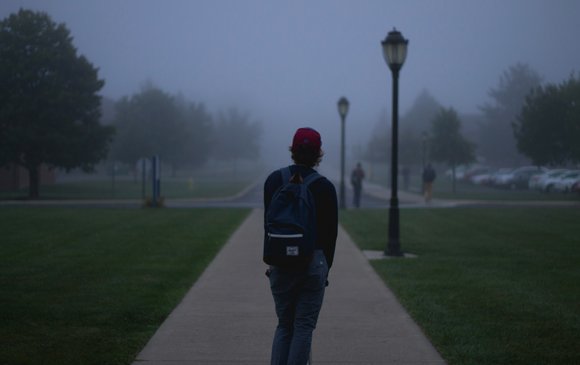
Will having depression at university affect my degree?
We’ll be honest. Some symptoms, like a lack of concentration, can have a real impact on your ability to study. That’s why it’s important to let your tutors know early on about any problems. That way they’ll be able to work out a solution and could help prevent a work crisis. For instance, tutors can often extend deadlines, offer extra support in problem areas, or even give you a break from studying while you recover.
Leaving work to pile up can also exacerbate your symptoms. Remember, unis are fairly experienced when it comes to students developing mental health problems. So don’t feel embarrassed and/or ashamed about talking to your personal tutor or course leader. They’re there to support you, regardless of the circumstances.
“Try your best not to get into an ‘all or nothing’ mindset,” says Alan Percy, head of counselling at Oxford University counselling service. “If you can’t manage all your work, it’s always better to try and do some rather than give up altogether. And instead of thinking you should study for eight hours (which is practically impossible), it’s better to aim for two or three hour chunks.”
Should I tell my friends I’m depressed at uni?
Worrying how friends will react is understandable. Especially if depression hits during your first year while you’re trying to get to know people.
“Unfortunately, there’s still some stigma surrounding mental illness. So we could never tell you with 100% certainty that you won’t be judged,” says Hannah Paterson, NUS Disabled Students Officer. “However, we can say that you are not defined by your mental health condition. Your friends and family love you for who you are. And those who truly care won’t change their opinion based on a medical diagnosis.” If you feel able to open up to your friends, you might even find out that they’ve been going through the same thing. Knowing you’re not alone can help.
According to Alan, it’s vital not to withdraw from your social life and isolate yourself. In fact, this is probably the worst thing you can do for your depression. “I know dealing with uni and depression is incredibly difficult but try to encourage yourself to see friends and do social things,” he says. “Just make sure to take it at your own pace. Start by going out for a couple of hours if that feels manageable, or see a few close friends, and see how you cope.”
Is it depression or just being fed up with life?
University can be a stressful time, so feeling sad or unmotivated from time to time is pretty standard. Depression, on the other hand, is usually chronic. If you’re still unsure, the NHS has a quiz that can help you assess your symptoms. These might include (but are not limited to):
- feeling persistently sad for weeks or even months
- lacking energy
- low self-esteem
- difficulty sleeping
Support for depression at university
Initially, if you’re feeling a bit down you might find that just having a chat about it with your friends, or family does the trick. But, if you’re constantly fed up with life, depression might be the cause. In which case, Alan recommends speaking to your doctor.
“They’ll assess whether your symptoms indicate a more serious level of clinical depression. If that’s the case then you may need treatment in the form of talking therapies or medication,” he explains.
The good news is that a doctor’s visit is relatively easy to arrange. Most universities have links with a GP surgery, or their own student health centre; your student union will have the details. The catch is that you’ll have to register with the new practice, but this doesn’t take much time. Plus you can always just stick with your GP back home if that feels more comfortable to you. Either way, getting in touch with a doctor is an important step toward improving your mental health.
Who else can I talk to about depression at university?
“Talking to a trusted friend can help lift the weight off your shoulders. But if you don’t feel comfortable opening up to someone you know there are also local charities and support services within your community, such as The Samaritans or HopeLineUK,” says Hannah.
Not to mention, every university offers free and confidential counselling services that are a great resource if you need someone to talk to. And at night, Nightline offers an anonymous listening service run by students, for students.
How to improve your mood when experiencing depression
Chris Leaman from the charity Young Minds recommends a few things that can easily be incorporated into your everyday life. “Try to get some fresh air most days, and some regular exercise – I know, a bit cliché, but there’s actually a proven link between exercise and better mental health. And make time to do things you enjoy as well. Whether it’s skateboarding, hanging out with friends or reading. You should also try to eat regularly – even just small meals – and write a diary about how you’re feeling.”
Young voices: How to get through university with depression
Getting stressed about university exams
The term before my university finals was stressful. I was contributing to the student newspaper, working on my dissertation, doing a module I hated, and, to top it all off, I still had family life to deal with. By the time I reached the end of term and got away from all the college students and campuses, I was exhausted. All I wanted to do was go home and spend my Easter holiday switching my brain off. Unfortunately, that wasn’t an option. I was staring straight down the barrel of three months of revision – all day, every day.
But the thing is I didn’t start revising. I told myself it was fine to take it easy, that I deserved a break after the previous term. I subconsciously acknowledged the fact that I had experienced a little bit of depression and anxiety. Besides, it felt like I had ages before I needed to start getting serious about work. So I told myself that I’d find the motivation to study closer to the exams.
How to get through university with depression: The first signs
It still amazes me how quickly the depression started spiralling. I knew I was tired, stressed, and lethargic, but it was like my life crumbled apart within a couple of weeks. But at that point the question of ‘have I got depression’ didn’t even cross my mind.
Seemingly overnight I went from always being busy and working hard, to sleeping up to 17 hours a day. When I was awake, I just watched TV in my room. The best way to describe myself during this period is probably a lifeless robot. I only saw people when I cooked dinner, and even then everyone would be talking about work and exams. So I eventually stopped joining in. I believe there was a stretch when I actually didn’t talk to anyone for five days. What was I doing, you ask? Basically, I just sat in my room and only left to make food when I knew no one was in the kitchen.
The breaking point
I also began eating a lot. I’d watch TV with a huge bar of chocolate or packet of biscuits to make me feel better. It was obviously a temporary fix though. When I saw the changes to my physical health, specifically my body and skin, it made me feel so much worse. In two short months I’d gained a stone and a half. None of my clothes fitted me. But I wasn’t all that fussed since I spent everyday in pjs. Basically I looked like the ‘reality’ bit of an ‘expectations vs reality’ on social media.
A couple of my friends started to notice that I was going MIA. To make sure I was doing ok, they came round to watch a film. For them, the film was a break from a long day in the library; for me, it was the first time I’d got out of bed that day. The problem was that even though they were there, I still couldn’t talk to them. I knew how much pressure everyone was under and I didn’t want to burden them with my mental health problem. Not to mention I was feeling increasingly guilty about doing no work. But, no matter how guilty I felt, I simply didn’t have the motivation to do anything.
Struggling with depression at university
About a month before my final exams it finally hit me that I had to learn three years’ worth of information in a very short period of time. Suddenly, I was confronted by just how much work I had to do. My first reaction was to cry uncontrollably because I was scared shitless. That was the moment I knew I had been experiencing a mental health crisis.
To help make up for the missed time, I signed up for a mock exam. Unfortunately, I ran out of it. Truth be told, I found it hard to have the energy to care at this point. All I wanted to do was crawl into bed, turn out the lights and never have to face anything again. I’d barely visited home and felt disconnected from everyone. Feeling utterly defeated, I called my mum in tears and she drove to see me immediately. From the moment she walked through my door, she said she knew that girl wasn’t her daughter.
Getting help for depression at university
She immediately urged me to see the university doctor. Point blank, I asked the doctor ‘have I got depression?’ and got diagnosed. The next step was seeing my tutor and discussing my options. I knew I couldn’t go through my exams just yet, so I arranged to take a year off and focus on ways to improve my mental health. This spring, I’ll be returning to university to take my finals.
In the meantime, I’m getting counselling and taking each day as it comes. Honestly, from the moment the work pressure was gone, I felt better. Gradually, I’m getting back to the person I lost during those months. Looking back, I realise that I should’ve spoken up earlier – not going to my tutor when I first had worries, not talking to my family, not speaking to someone impartial like my university’s Nightline or a mental health professional.
A piece of advice
That’s what enabled this to last for as long as it did. So I really don’t want people to make the same mistake I did. Students especially, I urge you to talk to someone about your mental health. Especially, if you’re experiencing depression, any symptoms of mental illness, feeling low or pressured by uni work. In the back of my mind, there’s still the fear that the depression could come back. Unfortunately, I think that’ll never really go away. But at least now I know I have a strong circle of friends and family around me, and that exams and grades aren’t everything.
So, how to get through university with depression? You talk to people and get the support you need. That could mean doing something as difficult as opening up about a long term mental health condition or even just reaching out to a mental health service. Whatever feels comfortable at the moment. As long as you put your mental and physical wellbeing first, and the rest will follow.
*Name has been changed
Published