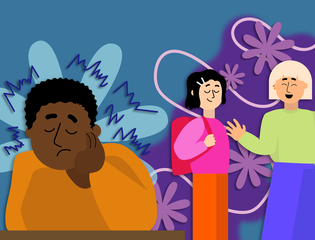
What is imposter syndrome?
Imposter syndrome manifests in different ways, but essentially involves doubting your achievements and skills. You may have experienced it after starting university; for example, if you’re struggling with your course, you may feel as though you don’t deserve your place on it.
While it may not seem like it, this is a very common feeling among university students – particularly those from underrepresented backgrounds. For example, if you’re the first in your family to go to university, you may feel out of place because perhaps you didn't grow up thinking it was an option for you.
Take pride in your authentic self
Despite this disconnect, you deserve to be there and should never have to change yourself in order to ‘fit in’. You don’t need to hide your background, change your accent or incorporate different words into your vocabulary. If anyone makes you feel uncomfortable being yourself, it might be a good idea to try distancing yourself from them.
If you received a contextualised offer to get into university, this may have contributed to your feelings of imposter syndrome. However, this absolutely does not mean that you didn’t earn your place like others on your course. UCAS reports that around half of all A-Level students who apply to university get in with lower grades than the official entry requirements, so getting into uni with lower grades is not uncommon – and definitely nothing to be ashamed of!
Connect with others you relate to
Creating a support network you can rely on is an important way of overcoming imposter syndrome. Check out your Student Union for societies created by students with characteristics that you share, as joining these can help foster a sense of belonging. For example, the 93% Club has societies across the UK for those who attended state schools.
There are often SU representatives who act as the voice for different groups including women, ethnic minorities, LGBTQ+ students and even students from the North of England.
Mari from upReach says, “I joined a Welsh Society, who also regularly met with Northern, Irish and Scottish Societies, which helped a lot with adjusting at uni and forming a supportive community.”
Remember to also keep in touch with your friends from home. It can be a struggle at first, trying to balance your uni course with the excitement of making new friends, but when things settle down, make sure not to neglect your old friendships.
Ask for help if you’re struggling with your course
If you’re struggling at university and it’s making you feel like you’re not good enough to be there, it can be helpful to remind yourself of your past accomplishments: studying hard, passing your exams and getting accepted university are no mean feat! You wouldn’t have gotten in if you weren’t able to do it.
To help you understand your course better, you can attend lecturers and tutors office hours. At school, you’ll likely have had much more scheduled contact time with your teachers, so office hours are a chance for you to ask questions and have a conversation with your tutors. If you’re nervous about going to office hours for the first time, pick your favourite tutor and approach them at the end of a lecture to say hi and ask what you can expect from their office hours.
Katie from upReach says, “I used to go to receive feedback on my essay plans, which made me feel much more confident that I was doing the assignment right, especially in first year when I had no clue how to write a university essay.”
Look out for bursaries and internships
If you’re from a working class background, you may have had less exposure to professional jobs than some of your peers at university. This may contribute to feelings of imposter syndrome, especially if you find yourself stuck in conversations you have no idea how to contribute to.
Connecting with people you can relate to will help with this, but we also recommend taking advantage of the other opportunities on offer to you – whether that’s support for all students at your university or initiatives specifically for those from underrepresented backgrounds. This could be mentorship schemes, internships and even bursaries for those with particular characteristics. You can also get a helping hand from charities like upReach, which specifically supports students from lower socioeconomic backgrounds with career development.
In conclusion
Imposter syndrome isn’t a nice experience, but you don’t have to suffer in silence. If you ever start feeling like you don’t deserve your accomplishments, why not lessen the burden by sharing your struggles with a friend or mentor? Chances are, they’ve experienced it themselves at some point, too.
About upReach
upReach is a multi-award-winning charity that provides 1-to-1 career coaching to ambitious students from lower socio-economic backgrounds, helping them to discover career options, develop employability skills and secure work experience at top companies across the UK.
Published