TLDR: Family arguments
Arguments are a normal part of family life. Living together means sharing space, responsibilities and opinions, so disagreements are bound to happen from time to time.
Family arguments often start over things like chores, personal space, stress, different beliefs, or feeling misunderstood. Small issues can quickly grow when people are tired or frustrated.
Taking a break can help. Step away from the situation, take some deep breaths, or give yourself time to cool down before continuing the conversation.
If conflict at home is making you feel stressed, anxious or overwhelmed, it can help to talk to someone you trust, like a friend, teacher or support service.
Focus on things that help you manage your emotions, like listening to music, going for a walk, writing down your thoughts, or spending time with supportive people outside the situation.
No family can be picture perfect. Even if smiles show in every picture frame on display, each has their own problems – power dynamics, social performance and insecurity included.
Managing tensions at home can feel like a full-time job, and learning how to mediate between your voice and that of your family’s could take time, but it’s a step worth taking.
How do arguments start?
Rather than avoiding arguments entirely and letting tensions build, start by figuring out what provokes them in the first place.
Reasons include:
- Wanting your own space. While many children dream of having siblings, it comes with its problems. In lower income families, and with the cost of living crisis, most families can’t afford to give their children their own room. Sisters end up sharing, or those closest in age. Even for children who whisper secrets to each other long after sunset, or build pillow forts with the sofa cushions they snuck into their room, sharing a space with someone every evening can be frustrating, for teenagers most of all.
- Talking back. In another sense, stubbornness. After all of the hours spent watching Disney films or guiding you through your homework, sometimes our parents refuse to accept that they could be wrong. Say something against them, and whether it’s your first day of secondary school or second year of university, they will do whatever they can so that their opinions take root in you. Even when you take your time to explain your reasoning, it does not mean that you will be heard.
- An imperfectly done chore, or jobs divided as fairly as stones in a landslide. Simple mistakes, admittedly, but ones that can soon spiral out of our control.
- Clashing beliefs and opinions. Even if you eventually come to a consensus, be it after ten minutes pass or a few days go by, it takes time and effort to explain your point of view.
- Failing to meet expectations, even our own. If your parents or siblings can’t seem to understand your emotions, whether it’s disappointment, frustration or something else entirely, it’s easy to snap.
- Stress or exhaustion. When you spend all of your energy on just getting through the day, by the time you come home the slightest insult, intended or not, can send you over the edge.
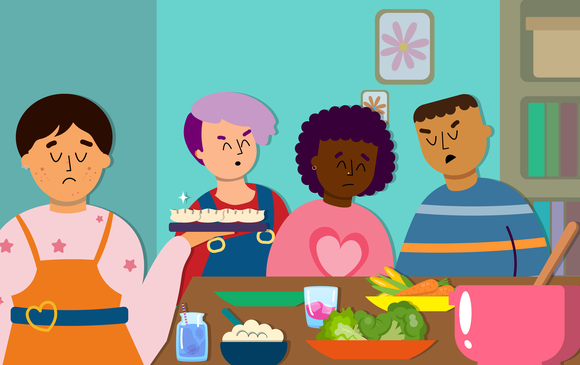
Arguments can start for hundreds of other reasons, each more mundane then we’d like to admit. They often seem to spring up without warning – a broken coffee cup, plates piled in the sink – and lasts until one party decides to storm off, desperate to have the last word.
Decide whether you want to deescalate the argument or avoid it entirely. Competitive people often clash with each other out of a need to prove themselves. Try to keep personality traits in mind during an argument to avoid worsening it.
Some people, as a result of their insecurity or excessive confidence, will make an argument out of anything to prove themselves right: consider telling them the truth or, if you’d rather avoid the aftermath, try to reach a stalemate with them instead.
Don’t be afraid to keep your distance from someone. If you find it difficult to get along with them, it might be best to have some space. Let yourself be angry or upset, and take as long as you need to decide whether the relationship does more harm than good.
After effects
Mental health problems only make arguments worse. Often, our family longs to believe that they did everything to make sure we didn’t have to go through the same problems as them. They say that we can talk to them about anything, that they’ll always be there for us. Anything except our sleepless nights, listless days and ever-growing worries.
The way they seem to see it, if we struggle through the same loneliness as they did, they failed as a parent. So they look for reasons to make our problems seem small, insist that we spent our childhood happy and content, disregarding the warning signs that they failed to notice. The tensions only grow.
If the fighting becomes unmanageable, it can have negative effects on your wellbeing. Being in a heightened state of anxiety makes us nervous and paranoid, looking for a fire before the match has been struck. This anxiety acts like an anchor, pulling at us until waking up in the morning becomes next to impossible.
You might find yourself lashing out at a single glare, a roomful of laughter that erupts as soon as you leave the room - anything that, in a different state of mind, you’d be able to ignore. It might feel like you’re not yourself anymore, but you’ve just stopped being able to hide how you feel. At least, that’s what it was like for me.
Managing your emotions
Among this tension, it’s important that you find ways to manage your emotions and relieve stress.
Try:
- Listening to music. Music can help us to forget about our problems by providing an outlet for our emotions. To many people, music makes them feel understood in a world which assumes they don’t have a story worth telling.
- Taking time out of the house. Take your dog for a walk, grab a few snacks from the corner shop. Whatever you decide on, just stepping outside your front door can help your mind reset.
- Putting your thoughts and emotions down on paper. Even if you just make a note of your thought process on your phone, it could help to quieten your thoughts.
- Spending time with people who would never ask you to compromise who you are for their sake. If you have a friend or sibling that values your time and listens to what you have to say without being demeaning, don’t take it for granted. Push them away, and when you next open your eyes, you’ll find yourself alone.
Maybe you could watch a show that you find comforting, or turn to a friend that always knows the right thing to say. Take time to figure out what coping mechanisms work for you. Coming up with a solution, permanent or temporary, can come later.
No family can be picture perfect. Not every problem will disappear just by closing your eyes and making a wish. Whether you choose reconciliation or separation, just try to keep your own voice in mind before moving forward.
Published