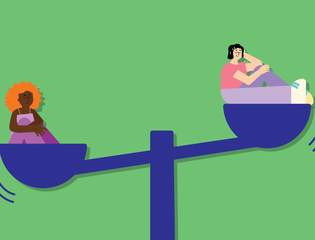
People are often talking about red flags in romantic relationships, but what about in our friendships?
Who we surround ourselves with is incredibly impactful on our mental health, which is why it’s important to associate with people who uplift and support us. Friendships are something to cherish, and like any relationship, they require mutual understanding, effort, and communication.
This being said, friendships can also be or become unhealthy, and it’s not always easy to recognise when a friendship needs re-evaluating. This list will hopefully point out some red flags to be aware of and help you decide your next move if you identify some of these traits in your current friendships.
Traits of a toxic friend
- Constantly talking negatively about others, particularly mutual friends.
Speaking from personal experience, someone who is often talking negatively about others behind their back is probably also talking negatively about you. Being around someone who is always making negative comments is very draining and can leave you feeling quite guilty and upset, especially if the person they are targeting is a mutual friend. If you notice yourself feeling less upbeat after spending time with your friend, that is a sign that something is off.
- Being left out or receiving selective invitations.
Hearing your friends making plans without asking you or seeing them out on social media is a confusing and upsetting experience. You may leap into a state of overthinking, wondering if you’ve done something wrong to warrant a missed invitation. This can also be said for selective invites when you are included in some group plans, but not all of them. Being excluded without any clear communication is a sign that your friend isn’t considerate of your feelings.
- Showing little or no interest in your problems.
If you struggle to approach your friend when you need support, as they tend to make it a competition, then they are belittling your experiences. Phrases like “I wish that was my biggest worry...” and “that’s nothing compared to what I’m dealing with...” or something similar are red flags. Friendships run on mutual understanding and support; your feelings shouldn’t be dismissed or have to meet a made-up criterion to be recognised. If you reach out to a friend for support, you deserve to be acknowledged.
- Criticizing you, especially in front of other people.
This can be cutting comments or constantly making jokes at your expense, which usually occurs when in a group. This might make you feel embarrassed, self-conscious and withdraw from social situations. Your friend may also dismiss your feelings by convincing you that “it’s just a joke” and you’re being “too sensitive,” making it harder to speak up. You might also notice them trying to get other members of the group to participate, to make you feel isolated, and to help them avoid accountability.
What to do next?
If you feel your friends/ friend are showing toxic traits, how you approach the situation is subject to your relationship with them. It may depend on factors like how long you have been friends, whether the friendship was ever healthy and whether you feel the friendship is repairable. Here are some steps you can consider taking:
- Addressing the problem with your friend.
Remember, a toxic friend doesn’t need to do every single thing listed above; even one or two of these habits can negatively impact your mental health. If your friend’s toxic behaviour has come on recently or the behaviour is not consistent, it may be worth discussing it with them. The conversation doesn’t have to feel confrontational; you just want them to listen to your feelings and take accountability.
This can look like pulling them aside or writing them a message addressing the event or behaviour, and how it made you feel. What happens next is out of your hands. If the friend listens, explains (not excuses), and apologises, then alters their behaviour, they are taking healthy steps to prove they respect your feelings and the friendship. If they make excuses, avoid accountability, or don’t change their behaviour, they are probably a friend you are better off without.
- Distancing yourself.
You might choose this option if the friendship is new or if your friend is showing quite a few of these habits. Again, this is subjective, but a new friendship might not feel worth the effort of repairing, because it is a recent addition to your life. This can also be said for a friend who is showing multiple toxic traits, as they are frequently disregarding your feelings. If you don’t feel it’s worth speaking to the person about it, but also want to protect your headspace, you should consider distancing yourself.
This doesn’t mean cutting the person off completely; it means withdrawing from them gradually. This can look like not meeting up with the person one-on-one and keeping conversations with them surface-level. You may find yourself still in group situations with them or seeing them when you need to, for example, if you share a class or a job. However, you protect yourself by keeping them at arm's length and not giving them access to your full time and energy.
- Cutting them off completely.
This is a more extreme but sometimes necessary approach. You may consider this if you have previously discussed with your friend how their behaviour is making you feel, and they haven’t changed, or if the impact on your mental health is too great. This would look like completely cutting contact with the person if able to, not meeting up with them alone or in a group, and essentially not giving them access to any of your energy.
A final word
To round this up, only you know the personal impact of your friend's toxic behaviour, but hopefully this guide has given you some options on how best to handle your specific situation.
A quick, friendly reminder that while any relationship has its struggles and no friend is perfect, repeatedly dismissing someone's feelings is not healthy or acceptable. You have a choice over who you allow into your life, and this is special.
We need and deserve people who make us feel appricated and who we can rely on when things get tough. Remember your worth and think, you have not met everyone you are destined to meet yet. Some people come into our lives unexpectedly and end up bringing so much joy and love with them. Save your effort for people who will cherish it!
Published